Aquanow crypto checkout
Design clear states to guide customers through the crypto payment experience
- My role
- Product designer leading the customer checkout experience
- Timeline
- August 2026 · 1 month
- Design stack
- Figma, Claude Code (prototyping)
- Collaborators
- 1 PM, 3 engineers, and 1 partner designer focused on merchant invoice creation
Imagine you’ve paid a $5,000 bill in crypto, but the checkout page hasn’t updated. What should you do?
Aquanow lets merchants accept crypto and receive the equivalent in traditional currency. But unclear payment updates left customers unsure whether their money had arrived. They contacted merchants for updates, creating frustration on both sides.
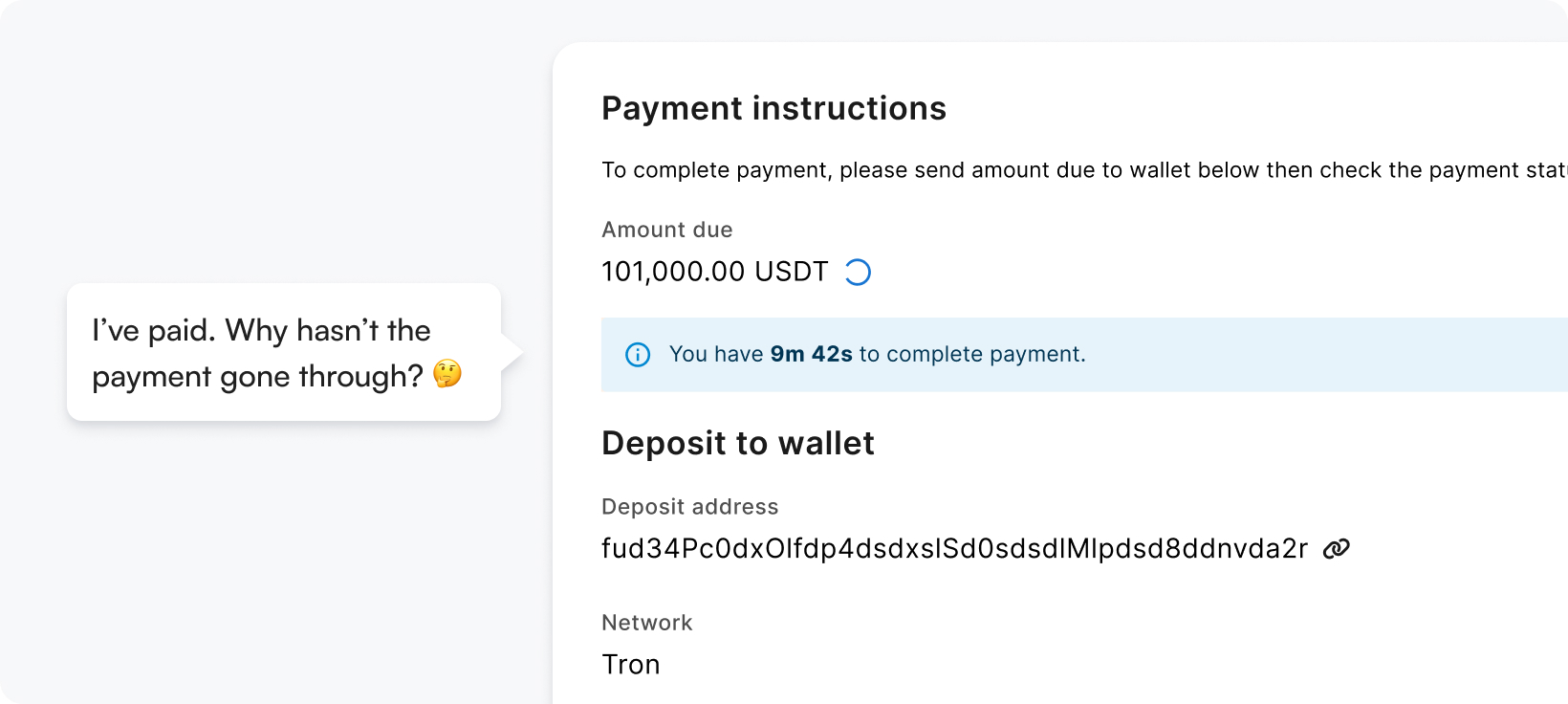
Give customers clear payment updates so they can finish checkout without contacting the merchant
I helped review merchants’ support tickets to understand where customers got stuck, then focused the redesign on clearer payment updates and next steps for different payment scenarios.
I addressed usability issues and redesigned the customer checkout interface while a partner designer worked on merchant invoice creation.
Customers lost confidence when they couldn’t tell what happened to their payment
I gathered insights from merchant interviews and reviewed incomplete payment journeys. Customers struggled to tell whether their payment had arrived or what to do when a session expired. That led me to focus on clearer updates and recovery.
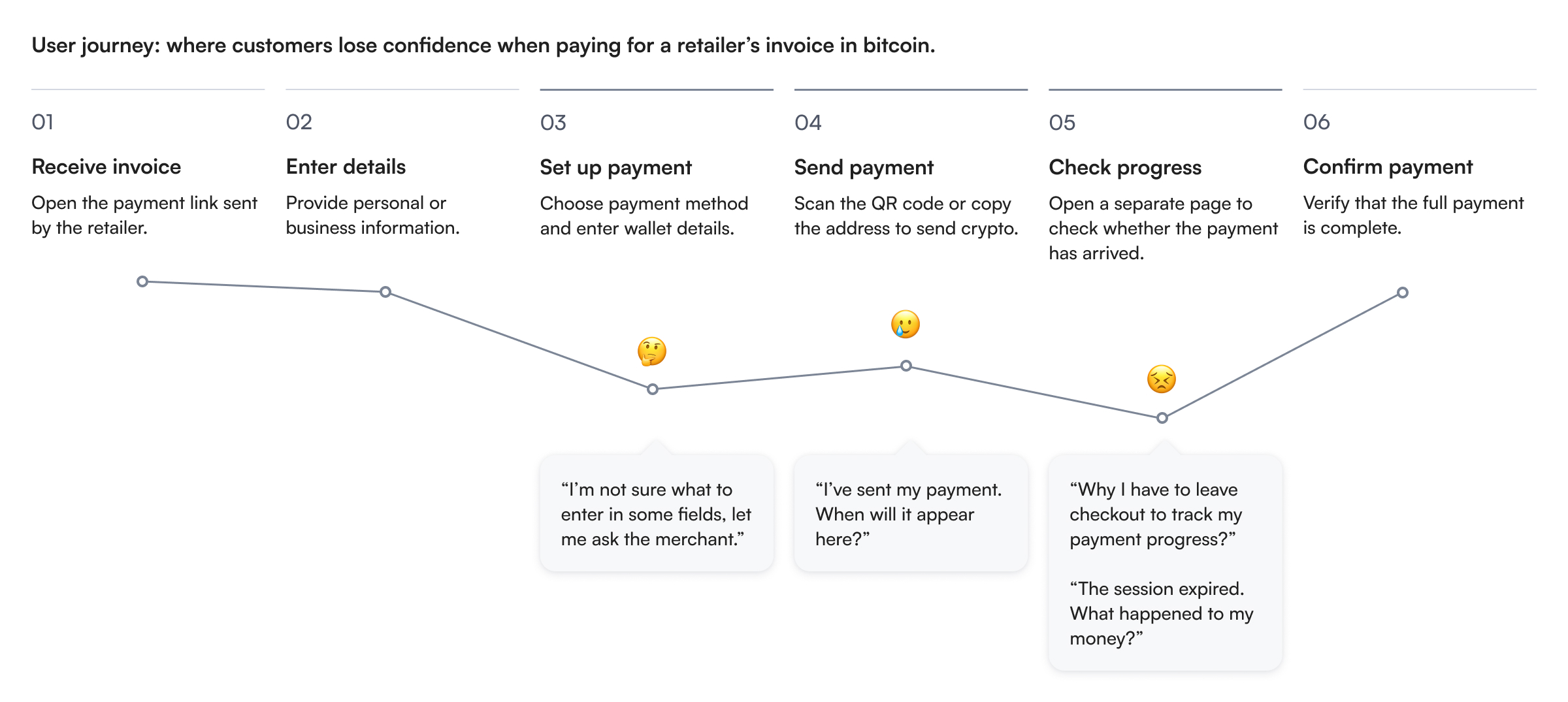
Two usability issues to address

Lack of payment visibility
Without timely payment updates, customers were unsure whether the checkout had received their money.

Poor error recovery
When a payment session expired, customers weren’t sure whether to wait, pay again, or contact the merchant.
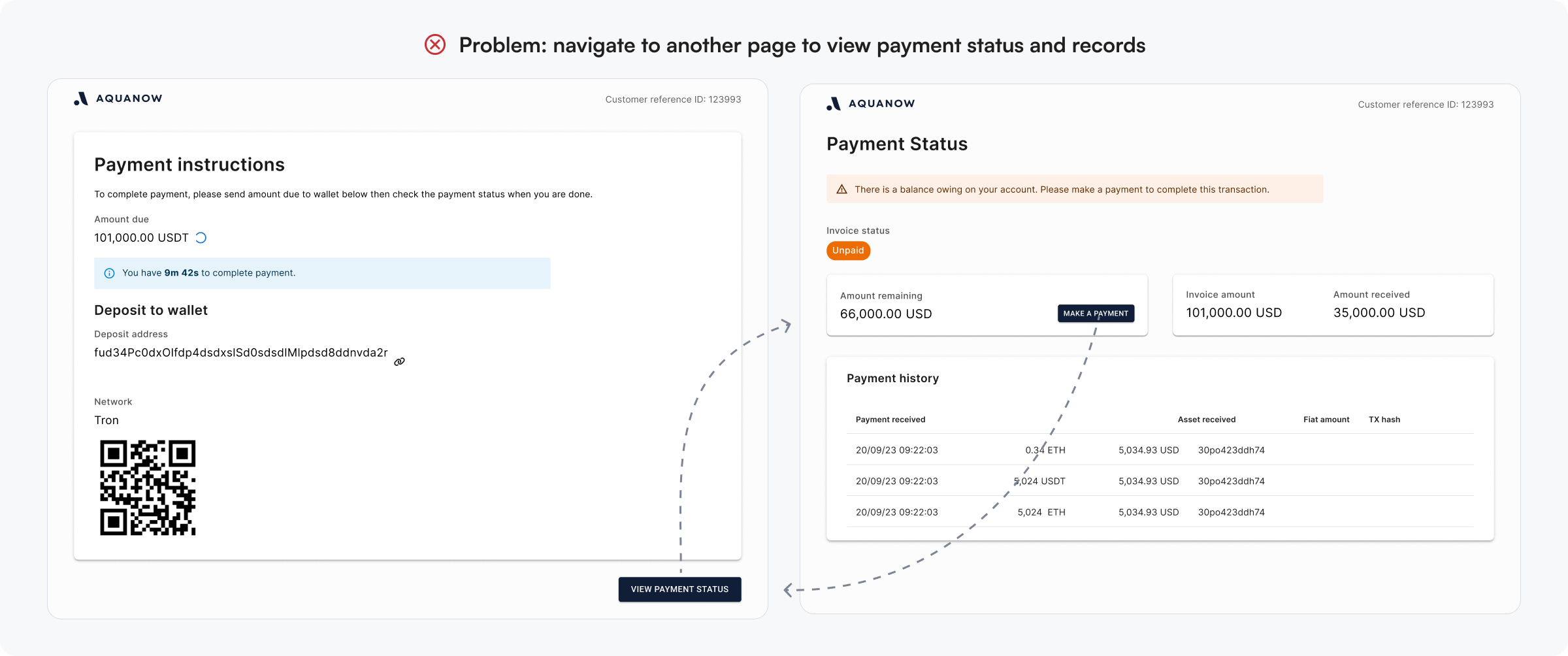
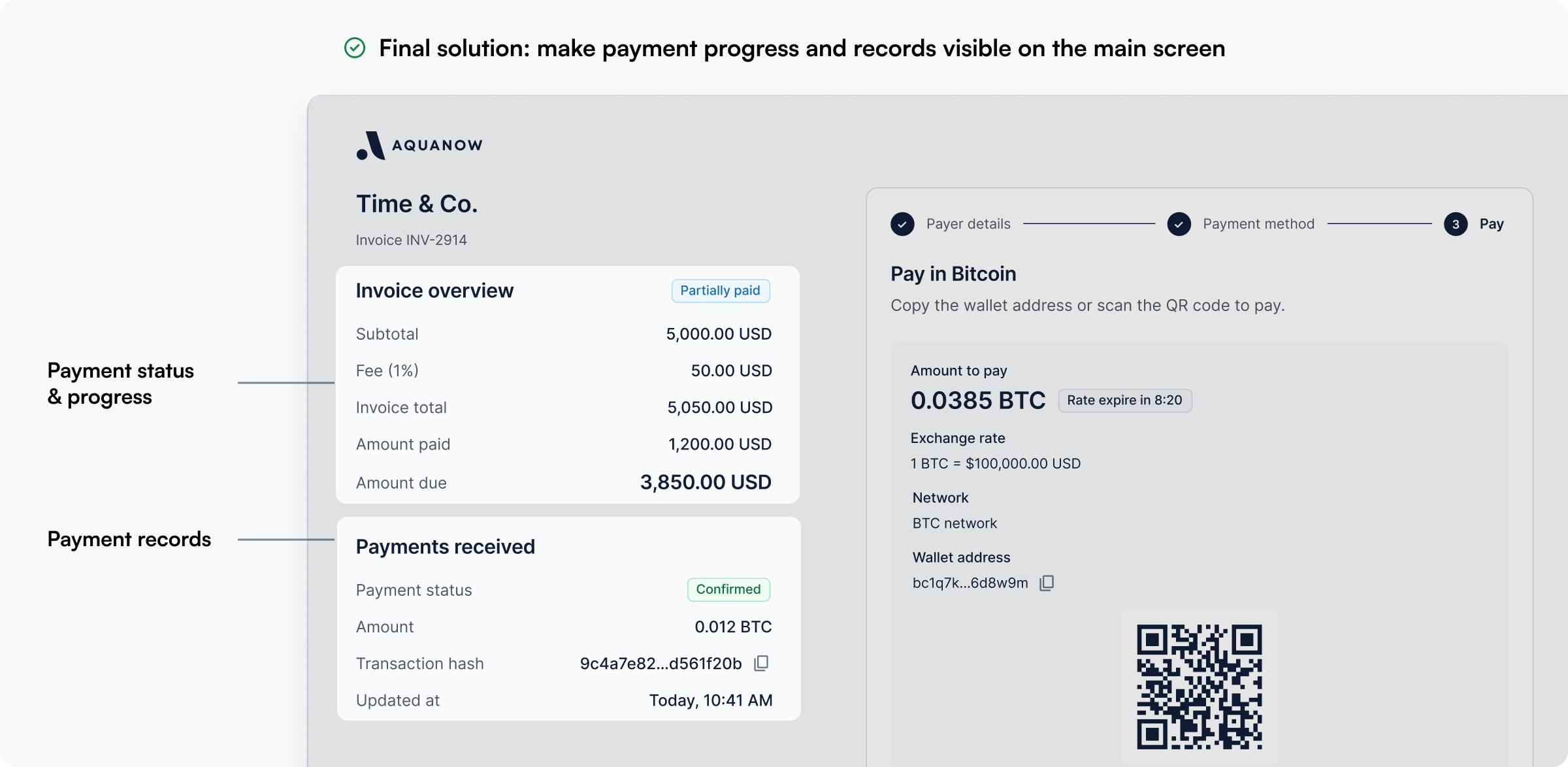
Track payments without leaving checkout
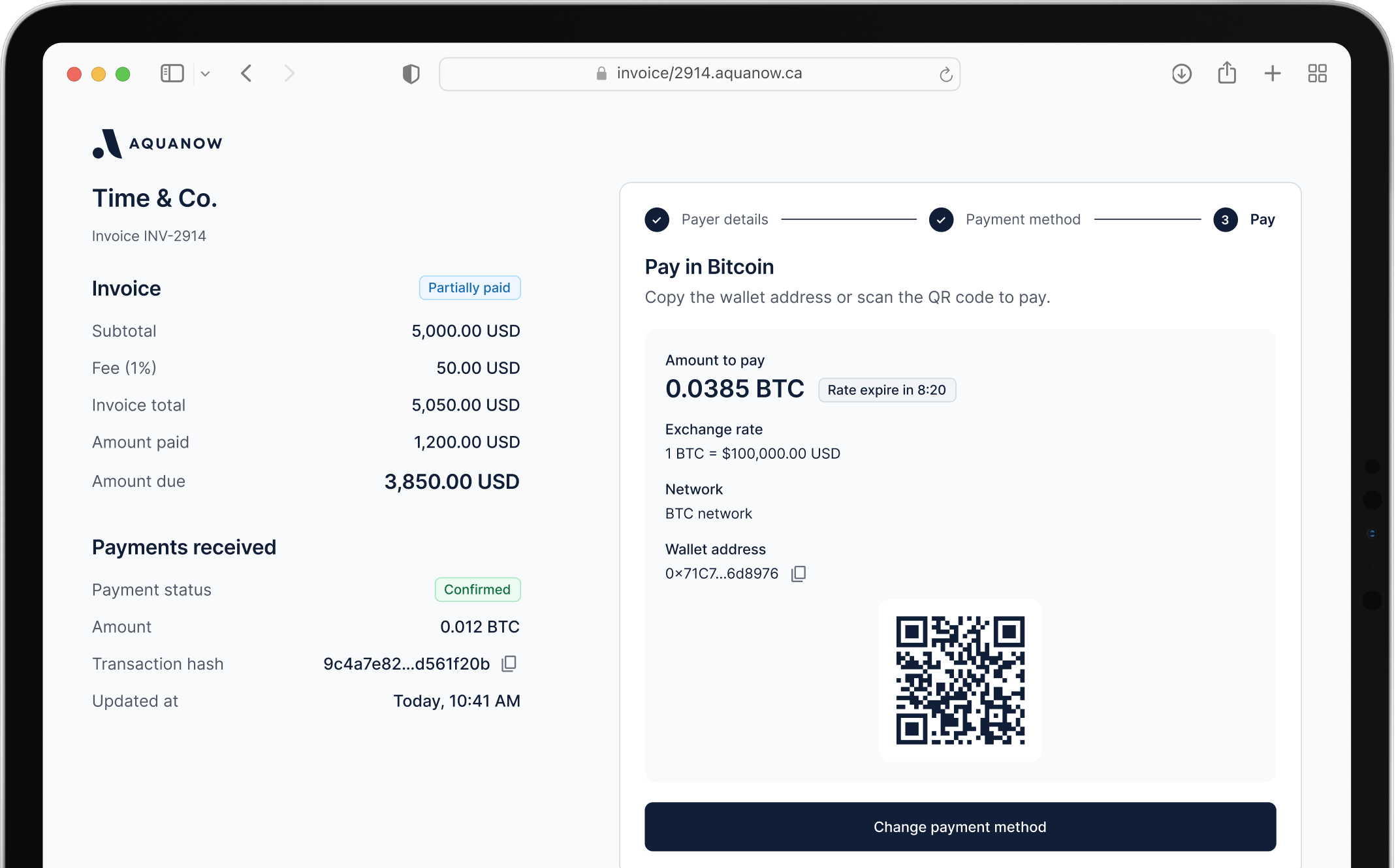
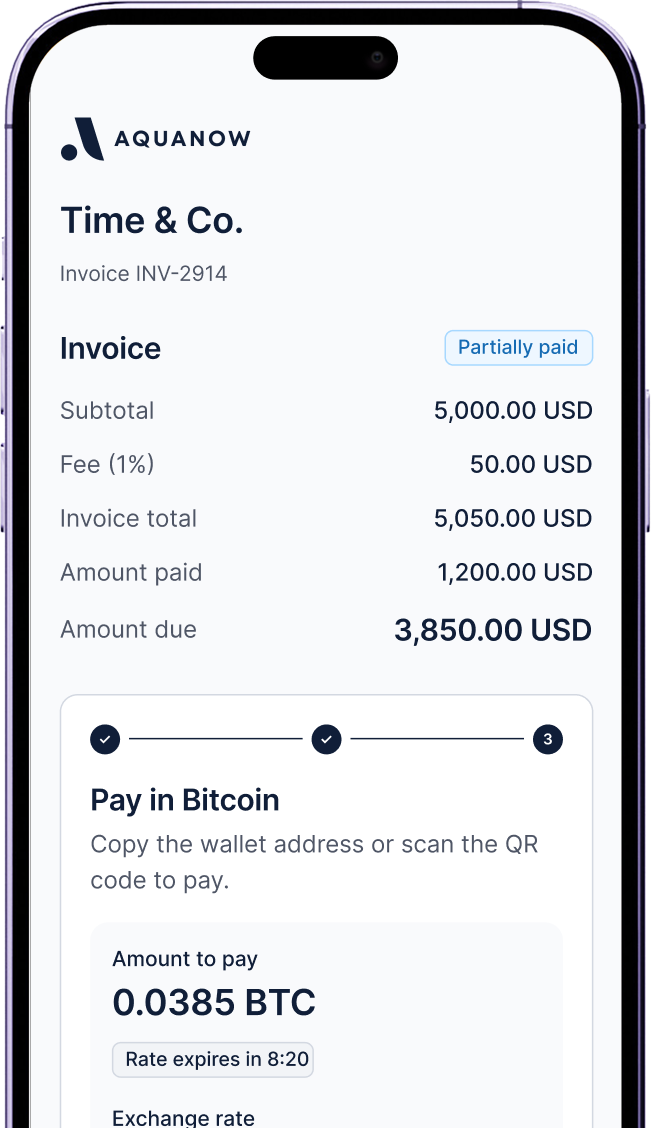
Customers had to switch pages to check whether their payment had arrived. I brought invoice status, progress, and individual payment records into checkout so they could track everything in one place.
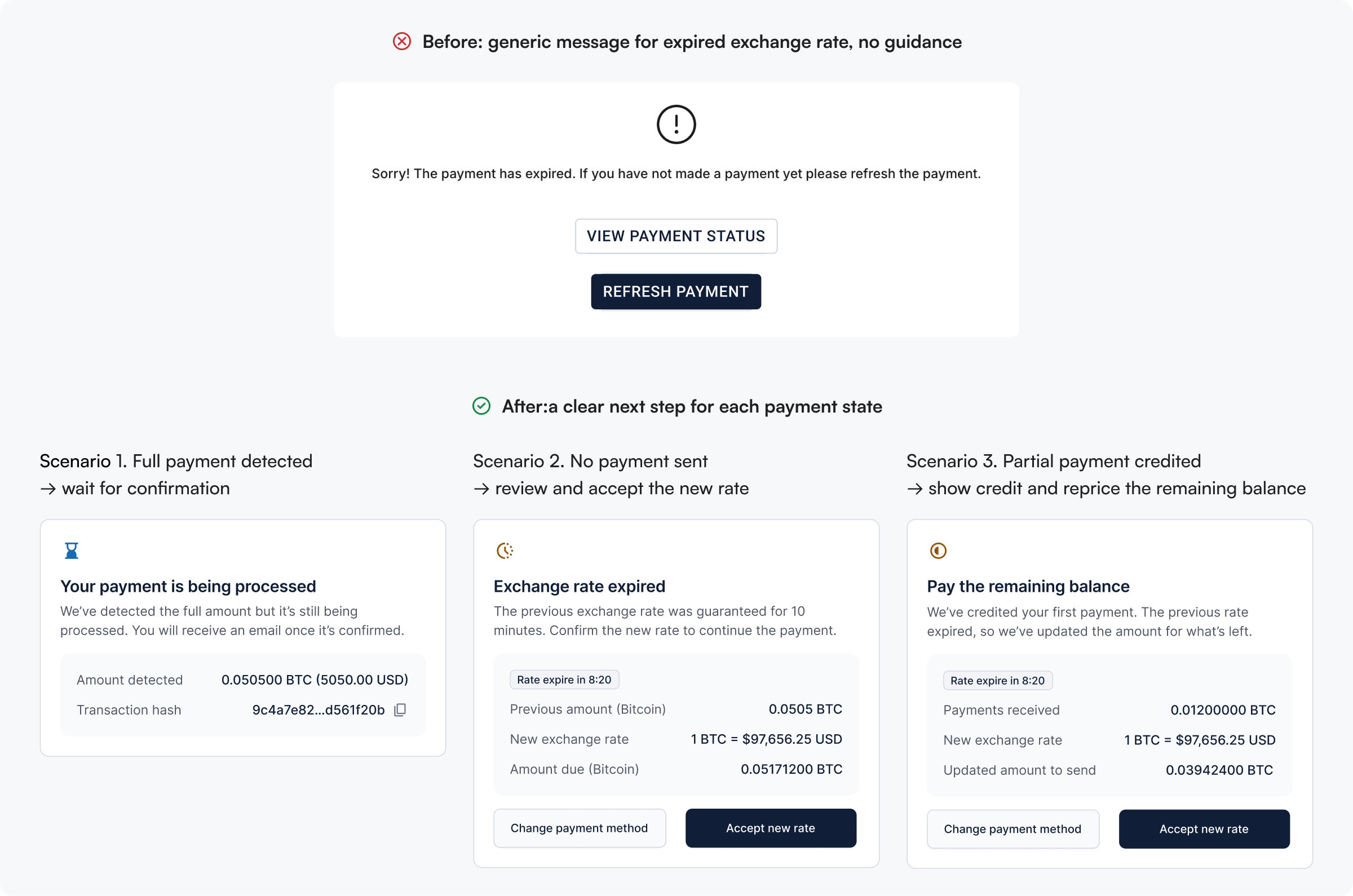
Give customers a clear next step when their payment session expires
An expired exchange rate didn’t always mean a failed payment. I worked with engineers to design three recovery paths based on whether the system detected a full payment, a partial payment, or no payment.
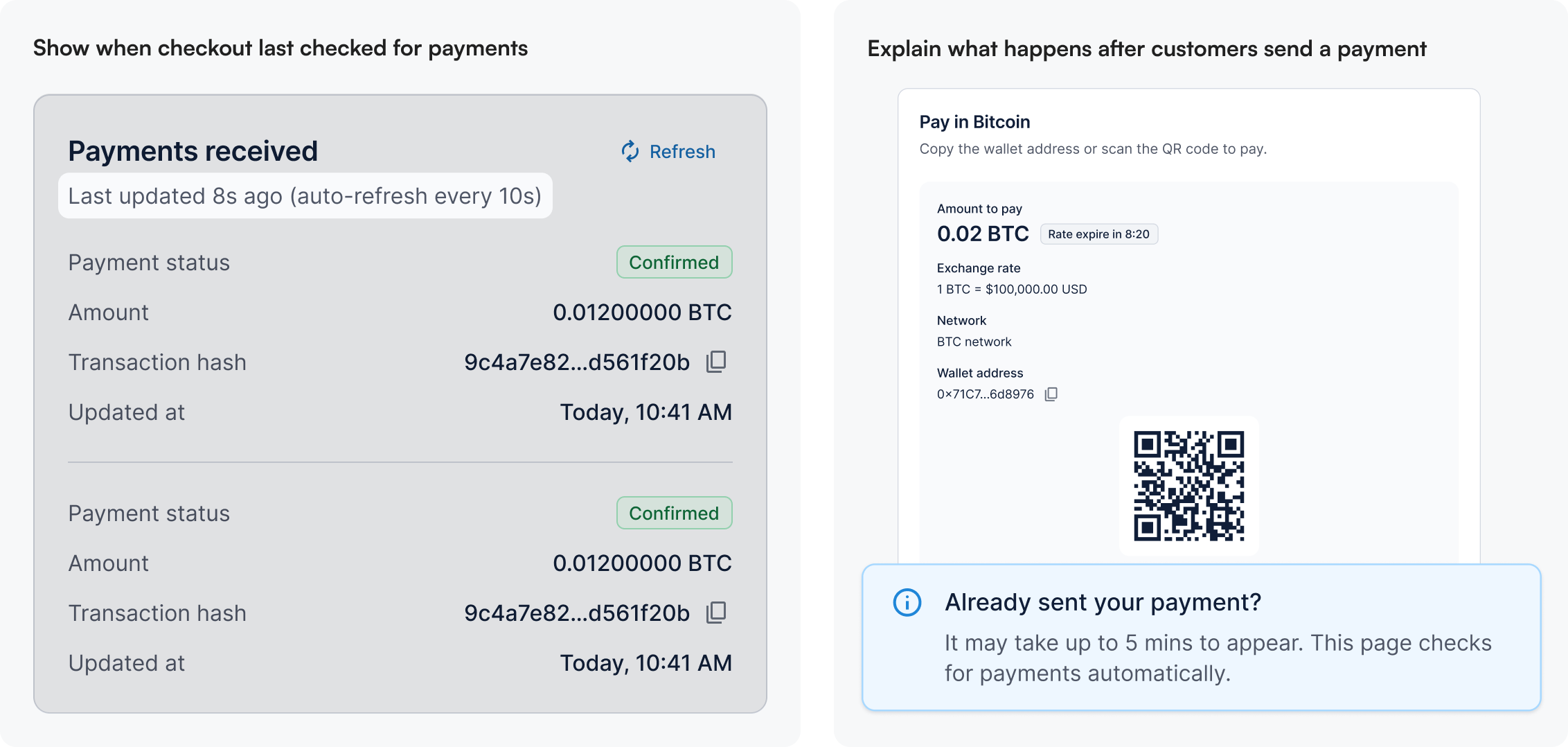
Show customers what to expect after they send a payment
Customers kept refreshing checkout to see if their payment had arrived. I added a note explaining how long a payment might take to appear and showed when checkout last checked for new payments.
Customers completed payments in 27% less time
Checkout analytics showed a 27% reduction in invoice payment completion time after launch compared with the previous flow. Related support tickets also decreased, indicating customers needed less help completing their payments.
Takeaways

Design for payment delays and recovery from the start
Reviewing the first release taught me to map these scenarios early and design around what customers need to know and do next when a payment is delayed, partially received, or interrupted by an expired rate.